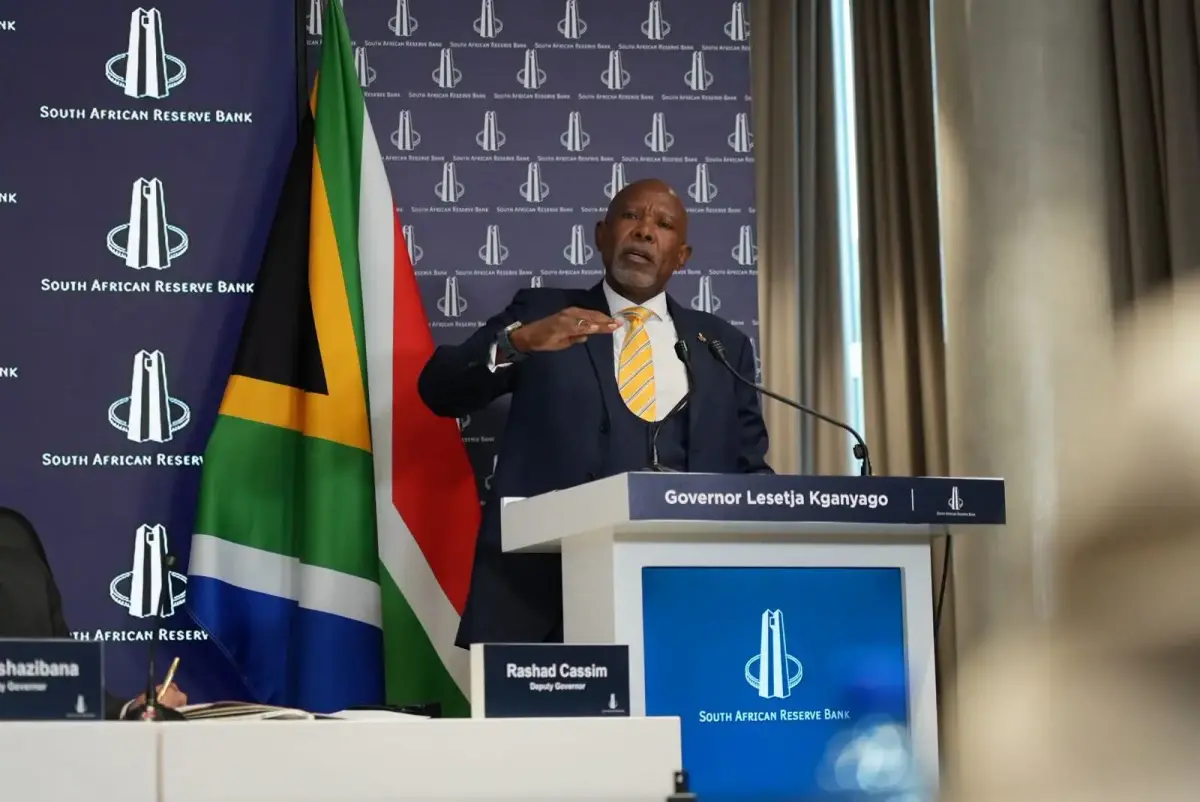
On 23 September 2026, the South African Reserve Bank's Monetary Policy Committee (MPC) unanimously decided to increase the policy (repo) rate by 25 basis points to 7.25%, effective 25 September. This lifts the prime lending rate charged by commercial banks to 10.7%. It marks the second hike of the year.
Governor Lesetja Kganyago cited upside risks to inflation driven by intensifying geopolitical conflicts – particularly disruptions in the Middle East affecting oil flows through the Strait of Hormuz, interruptions to Saudi exports, and ongoing effects from the Russia-Ukraine war. These have created a large, persistent global supply shock. Petrol prices, which had moderated earlier, are rising again (with an average under-recovery of about R2.83 per litre at the time of the announcement). Headline inflation stood at 4.4% in August (up slightly from 4.3% in July), against the SARB's 3% target.
The Bank revised its near-term inflation forecasts higher and now expects headline inflation to exceed 5% later in 2026 and into early 2027 before erasing, returning towards 3% only towards the end of 2027. Food inflation remain relatively favourable (the lowest since 2010, supported by strong harvests), and the rand has been resilient in containing import prices, but services inflation is elevated. Longer-run inflation expectations remain above target (around 4% in surveys). Growth forecasts were trimmed to 1.2% for 2026 (from 1.4%), after a 0.2% contraction in the second quarter, though a rebound is expected in the second half of the year. Medium-term growth is still projected around 2%, contingent on stabilising global conditions and domestic reforms.
The MPC described the move as measured and proportionate in a highly uncertain environment. Its Quarterly Projection Model suggests the policy rate could remain broadly stable for the rest of 2026, with potential cuts later as inflation declines, but decisions will continue to be made on a meeting-by-meeting basis. Scenario analysis showed that stronger global rate increases or higher domestic inflation expectations and wages would require a tighter stance.
Implications for households
Higher borrowing costs will immediately affect variable-rate debt. Homeowners with floating-rate mortgages, vehicle finance, personal loans, and credit cards will face higher monthly repayments. For many middle- and lower-income households already under pressure from living costs, this tightens disposable income and may constrain spending on non-essentials. First-time buyers and those seeking new credit could find it harder or more expensive to access finance.
Savers, by contrast, stand to benefit. Higher deposit and money-market rates improve returns on savings accounts, fixed deposits, and other interest-bearing instruments, offering some relief to those with cash buffers. Overall, the distributional effect tends to favour net savers over net borrowers.
Implications for businesses and the broader economy
Businesses face higher costs of working capital, investment loans, and overdraft facilities. This can delay expansion, hiring, or capital projects – particularly for smaller firms and those in interest-sensitive sectors such as property, retail, and construction. Combined with already soft growth, tighter monetary policy reinforces downside risks to activity in the near term.
The intention is to prevent second-round effects (where fuel and other price shocks feed into broader wage and price-setting behaviour) and to anchor expectations closer to the 3% target. Successful containment of inflation over time protects the purchasing power of the rand, reduces the inflation risk premium, and supports more sustainable long-term growth. The SARB emphasised that domestic reforms – improving productivity in energy and transport, strengthening local government, and maintaining sound fiscal policy – remain the primary route to higher growth in a difficult global environment.
Currency markets reacted with some rand weaknesses in the immediate aftermath as investors digested the inflation risks and higher global rates. Over a longer horizon, credible inflation control tends to support the currency and lower South Africa's country risk premium relative to peers facing similar shocks.